
Slots Shine casino Plinko
Introduction: what Slots shine casino Plinko actually offers
Plinko looks almost too simple at first glance. A ball drops from the top of the board, bounces off a field of pegs, and lands in one of several payout slots at the bottom. That is the whole visual idea. Yet in practice, Slots shine casino Plinko creates a very specific kind of gambling session: fast, highly readable, and often more psychologically intense than many players expect from such a minimal format.
I have always found Plinko interesting because it strips casino gaming down to its bare essentials. There are no reels, no paylines, no bonus rounds to decode, and no complicated paytable to memorise. Instead, the tension comes from path uncertainty. You can see the drop in real time, but you still cannot control where it ends. That combination of transparency and helplessness is a big part of why the format has gained so much attention.
For UK players trying to understand whether Plinko is worth their time, the key question is not whether the board looks entertaining. The real question is what kind of experience it produces over a session. On that point, Plinko deserves a closer look. It is easy to enter, but it does not always behave in the way casual players assume. The interface is simple; the session dynamics are not.
In this review, I will focus strictly on the Plinko game at Slots shine casino: how it works, what drives its rhythm, where the pressure points are, and what a player should understand before placing even a small stake.
What Plinko is and why it has become so visible
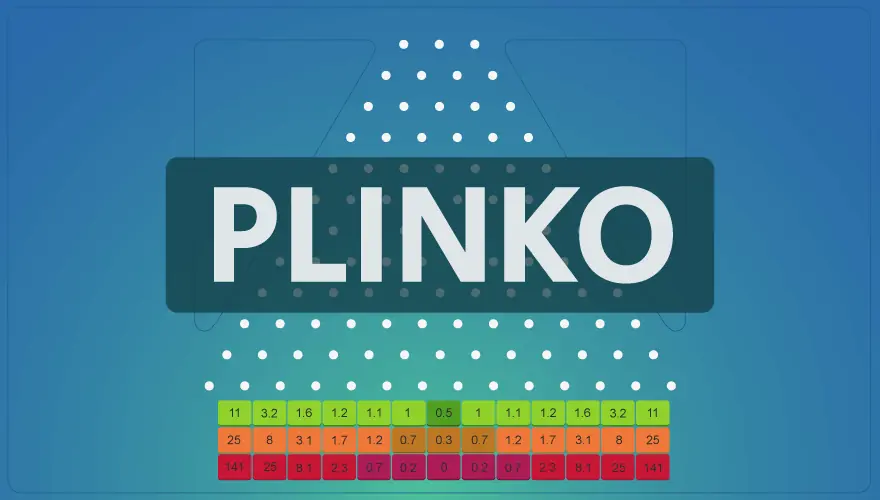
Plinko is a probability-driven drop game built around a vertical board filled with pins. The player chooses a stake, usually selects a risk level, sometimes adjusts the number of rows, and then releases a ball from the top. As the ball hits peg after peg, it drifts left and right until it lands in a multiplier slot at the bottom. The final multiplier determines the return on that round.
That may sound closer to a physics toy than a casino product, and that is exactly part of its appeal. Plinko is visually intuitive. Even a first-time player understands the premise within seconds. There is almost no learning barrier. In a market crowded with complex slot interfaces and layered bonus systems, that clarity matters.
Its visibility also comes from another factor: the result feels visible while still being uncertain. In many casino games, the outcome appears instantly or is hidden inside a spin calculation. In Plinko, the path unfolds in front of you. The board creates the illusion that you are watching the result develop organically. That visual journey keeps attention locked in, even though the underlying outcome is still governed by randomisation.
One of the most important observations here is that Plinko does not need elaborate presentation to hold interest. It creates suspense from a single moving object and a short delay before the landing point. That is efficient design. It also explains why the game has become noticeable across modern casino platforms, including Slots shine casino.
How the Plinko board works in real play
The core structure of Plinko is straightforward, but understanding the board properly helps a lot. At the top, the player drops a ball. Each time the ball touches a peg, it deflects left or right. After multiple collisions, it reaches the bottom row, where each slot has its own multiplier. Lower multipliers tend to sit closer to the centre, while the highest potential returns are usually placed near the far edges.
This arrangement is not accidental. The centre is statistically easier to reach because there are more possible paths that lead there. The extreme edges are harder to hit because they require a more unusual sequence of left-right deflections. That is why the biggest multipliers are rare. The board may look balanced, but the payout distribution is not flat.
What matters in practice is that most rounds cluster in the middle area. Players often remember the dramatic edge hits, but a typical session is built on frequent lower or moderate multipliers. That balance between common modest results and rare large outcomes is what gives Plinko its characteristic session profile.
In many versions, including the type commonly associated with Slotsshine casino pages for this format, the player can also choose the number of rows. More rows generally mean a longer path and a wider potential multiplier spread. Fewer rows usually produce a tighter result range. This changes how the session feels. A shorter board resolves quickly and often feels less dramatic. A taller board increases anticipation and can make each drop feel more consequential.
| Board element | What it does | Why it matters to the player |
|---|---|---|
| Pegs | Deflect the ball left or right on each contact | Create visible randomness and shape the path to the final multiplier |
| Rows | Determine how many deflections occur before landing | Influence pacing, spread of outcomes, and session tension |
| Multiplier slots | Set the return for the completed drop | Define whether the round ends in a small return, a break-even style result, or a rare spike |
| Risk setting | Adjusts the payout distribution profile | Changes how often modest results appear versus how rarely larger multipliers can occur |
Risk levels, movement logic, and the real shape of a session
The most misunderstood part of Plinko is the risk selector. Many players treat it like a simple mood setting: low for Slots Shine Casino safety guide for UK players, high for excitement. In reality, it changes the way outcomes are distributed across the board. That is not a cosmetic adjustment. It can significantly alter the entire feel of a session.
On low risk, the multiplier map is usually flatter. Extreme top-end returns are smaller, but the board tends to produce more moderate landings. This can make the session feel steadier, even if no mode removes the house edge or guarantees balance over short play.
On medium risk, the spread becomes more pronounced. There is still some regularity in the middle of the board, but the gap between ordinary and standout results starts to widen. Many players find this setting the most readable because it preserves some rhythm without completely flattening the excitement.
On high risk, the game becomes much sharper. The centre often pays very little compared with the outer zones, and the largest multipliers become far more noticeable on the paytable. The trade-off is obvious: long stretches of weak returns can build up while waiting for a rare hit that may never arrive during that session.
That leads to a practical truth: Plinko does not just become riskier because the top multiplier is bigger; it becomes more emotionally uneven. A high-risk board can produce a string of outcomes that feels cold and repetitive, then suddenly deliver a result that changes the whole balance. This stop-start emotional pattern is one reason the format attracts some players and frustrates others.
- Low risk: tighter distribution, usually calmer sessions, fewer dramatic spikes.
- Medium risk: more contrast, a balanced middle ground for players who want movement without extreme swings.
- High risk: larger headline multipliers, but a greater chance of extended dry stretches and sharper bankroll pressure.
Why Plinko feels fast even when each round is simple
Plinko is not a slow-burn product. Even when the animation is smooth rather than instant, each round resolves quickly. There is no reel sequence to sit through, no feature teaser, and no multi-step bonus trigger. You place a stake, release the ball, watch the path, and get the result. Then you can repeat immediately.
This creates a fast decision loop. The player is not processing much information between rounds, which lowers friction and increases repetition. In practical terms, that means session speed can become deceptively high. A player may feel that they are casually watching a few drops, when in fact they are moving through rounds much faster than they would in a conventional slot session.
I think this is one of the most important things to understand before trying Slots shine casino Plinko. The game looks gentle because the interface is clean and the action is easy to follow. But the betting rhythm can be intense. Simplicity often accelerates spending more than complexity does.
Another memorable point is this: Plinko often feels less like spinning and more like testing probability in bursts. That changes the psychology. Instead of waiting for a feature, players often start chasing a particular board result or hoping to witness an edge landing. It is a small but meaningful difference in how attention gets captured.
What players need to understand about probabilities and expected outcomes
Plinko is built on random outcomes shaped by a payout distribution. That sounds obvious, but many players still read too much into short-term patterns. If several balls land near the centre in a row, that does not mean the edge is “due”. If a high multiplier appears once, that does not signal a hot phase. Each drop is a separate event within the game’s programmed structure.
The visual path can encourage false confidence. Because you watch the ball bounce from peg to peg, it can feel as though the result is developing in a way you can interpret. In reality, the path is entertainment layered over a mathematically defined outcome model. The board is readable, but not predictable.
For the player, the practical takeaway is simple:
- Short sessions can look wildly different from one another.
- A few strong results do not prove the setting is favourable.
- A long sequence of weak landings is entirely possible, especially on aggressive risk levels.
- The largest multipliers are designed to be rare, not routine.
This is where Plinko can catch people off guard. The game feels transparent, so players sometimes assume it is easier to “read” than slots. It is not. In some ways, it can be more deceptive because the randomness is visible rather than hidden behind reels.
| Session factor | What a player may expect | What often happens in reality |
|---|---|---|
| Visible ball path | The result can be sensed as it unfolds | The path creates suspense, but does not offer meaningful control or forecasting |
| High-risk mode | Better chance of a big return | Higher ceiling, but usually harsher short-term variance and more weak landings |
| Simple interface | Easy, relaxed play | Easy to start, but often faster and more repetitive than expected |
| Rare top multiplier | A realistic target if enough drops are made | A possible outcome, but not something a player should build a session plan around |
How Plinko differs from classic slots and other casino games
The clearest difference between Plinko and classic slots is structural. Slots are built around reel combinations, symbol weighting, paylines or cluster systems, and often bonus features that change the state of play. Plinko has none of that. There is no evolving round structure. Every drop is self-contained.
This gives Plinko a cleaner profile. You do not need to learn symbol values or track feature frequency. But the trade-off is equally clear: there is less variety inside the session. If you enjoy layered mechanics, expanding wilds, free spins, or bonus buy structures, Plinko may feel too stripped down after a while.
Compared with roulette, Plinko shares a similar appeal in that each round is quick and outcome-driven. But roulette presents fixed betting options before the result, while Plinko packages everything into a single drop and a multiplier map. Compared with crash games details, Plinko is less about timing decisions and more about accepting a fully automated outcome. Compared with blackjack, there is no strategic layer at all.
That means Plinko sits in a distinct niche. It is ideal for players who want direct action without rule complexity, but it is less suitable for those who want either strategic influence or feature-rich progression.
One observation that often gets missed is this: Plinko replaces narrative with repetition. Slots tell a story through symbols, themes, and bonus events. Plinko removes almost all of that and relies on pure outcome tension. Some players find that refreshing. Others find it thin after the novelty fades.
Where Plinko performs well and where it can disappoint
From a practical standpoint, Plinko has several genuine strengths. First, it is accessible. A new player can understand the format almost instantly. Second, it is transparent in presentation. You can see the full board, the multiplier structure, and the result path. Third, it is flexible in tone. By adjusting stake size, rows, and risk level, the player can shape the session into something calmer or more aggressive.
These are real advantages, especially for players who dislike overloaded game screens. At Slots shine casino, that simplicity is part of the attraction. You are not studying a paytable for ten minutes before you begin. You are interacting with a format that explains itself visually.
Still, the limitations are just as real. Plinko can become repetitive faster than slots because the core action never truly changes. There is no second layer waiting to unlock. If the player is not emotionally engaged by the drop itself, the format can lose impact quickly.
Another issue is expectation management. Because the game looks simple, some players assume the experience will be low-pressure. That is not always true. On higher-risk settings, the pace and uneven return pattern can create more tension than many themed slots. The board may look harmless; the bankroll curve may not. Table game fans will get more out of this review after reading Aviator crash game checklist.
I would also flag one more practical weakness: big multipliers are highly marketable but not central to the average session experience. They help define the identity of the game, but they should not define the player’s expectation.
Who Plinko suits best, and who may be better off elsewhere
Plinko tends to suit players who appreciate immediate results, low learning friction, and a visually clear format. If you like short rounds and do not need story-driven presentation or elaborate bonus structures, it can be a strong fit. It also works for players who enjoy adjusting session style through risk settings rather than through game-hopping.
It is less suitable for players who want sustained variety. If your enjoyment depends on unlocking free spins, discovering side features, or making decisions that influence the round, Plinko may feel one-dimensional. The same applies to players who are highly sensitive to dry stretches. High-risk Plinko, in particular, can feel unforgiving if you expect regular reinforcement.
For cautious players, lower-risk settings may offer a more manageable entry point. For thrill-seekers, the aggressive settings provide sharper upside, but only with the understanding that the session can turn flat for long stretches. Neither mode changes the basic truth that outcomes remain random and the house edge still applies.
In short, the best match for Plinko is a player who values clean design, accepts repetition, and understands that visible motion does not equal control.
What to check before launching Slots shine casino Plinko
Before starting a session, I would suggest focusing on a few practical points rather than jumping straight into repeated drops.
- Check the risk setting first. It has a larger impact on session feel than many players expect.
- Look at the multiplier spread. Do not focus only on the top number; pay attention to how much of the board is made up of low returns.
- Understand the pace. Even small stakes can add up quickly when rounds resolve fast.
- Use demo play if available. This is useful not for “beating” the game, but for understanding how different settings alter rhythm and result distribution.
- Decide what kind of session you want. If you want steady entertainment, an aggressive setup may work against you. If you want occasional high-impact moments, low risk may feel too flat.
These checks sound basic, but they matter because Plinko encourages impulsive play. The board is inviting, the rules are obvious, and the next round is always one click away. That is exactly why a little pre-session clarity helps.
Final verdict: is Slots shine casino Plinko worth trying?
Slots shine casino Plinko is worth trying if you want a casino format built on clarity, speed, and visible randomness rather than reel features and layered bonus design. What it really offers is not complexity, but concentration. Every round is a compact moment of uncertainty, and the appeal comes from watching a simple process produce uneven outcomes.
Its main strengths are easy to define: instant accessibility, a clean interface, adjustable risk profile, and a style of suspense that feels different from classic slots. Its weaker points are just as clear: repetition can set in quickly, high-risk sessions can become harsh, and the most eye-catching multipliers are much less representative than they appear.
This is why Plinko divides opinion. For some players, it is refreshingly direct. For others, it lacks depth and can feel mechanically narrow after the first burst of novelty. I would not describe it as a universal recommendation. I would describe it as a very specific gambling format that works best when the player understands exactly what it is.
If you want a session with simple controls, fast outcomes, and a strong sense of visible chance, Plinko at Slots shine casino can absolutely deliver that. If you want strategic decision-making, evolving bonus sequences, or longer-form slot-style engagement, another format will probably suit you better. The key is to treat the game honestly: simple to enter, easy to misread, and much more defined by risk settings than its clean design first suggests.
FAQ
What is Plinko on Slots Shine and how does a round work?
A Plinko round drops a ball from the top and it bounces between pegs until it lands in a scoring zone with a multiplier. The game uses real-time ball physics to determine the final result.
How can a visitor start a Plinko round in demo mode?
Open the Plinko section and select demo mode if the option is shown. Use the stake controls available on the screen and release the ball to begin the round. Demo play is meant for familiarising with multipliers and the board layout before real-money play.
If a bonus or promo code is offered, can it affect Plinko outcomes?
Promos and bonuses may apply only when their terms explicitly include Plinko and real-money play. Before activating a bonus code, review the wagering and eligible games rules shown for that offer. Demo rounds are typically not covered by casino bonuses.